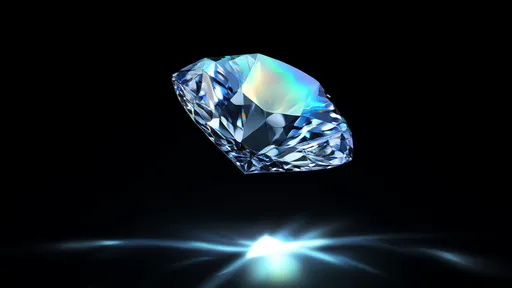
The art of gemstone cutting has entered a new era with the integration of ray tracing algorithms, a computational technique borrowed from advanced computer graphics. Traditionally, master cutters relied on experience, intuition, and manual calculations to determine the optimal facet angles that would maximize a gem's brilliance and fire. Today, sophisticated software powered by ray tracing is revolutionizing this ancient craft, enabling precision that was previously unimaginable.
Ray tracing, at its core, simulates the way light interacts with objects in a virtual environment. By modeling the behavior of individual light rays as they reflect, refract, and scatter within a gemstone, these algorithms can predict how light will behave for any given facet arrangement. This computational approach eliminates much of the trial-and-error associated with traditional gem cutting, allowing designers to explore countless configurations before making a single physical cut.
The marriage of optics and computation has yielded remarkable results. When applied to gemstone optimization, ray tracing doesn't just replicate natural light behavior—it enhances our understanding of it. The software can account for subtle optical phenomena that even experienced cutters might overlook, such as the way different wavelengths of light separate within the stone or how minute angle variations affect overall light return.
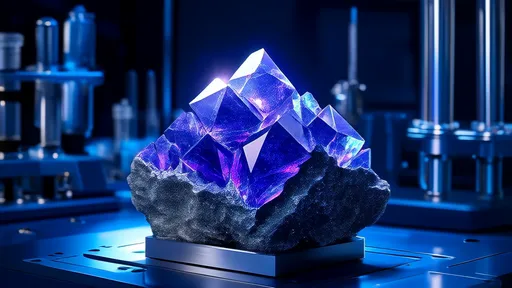
One particularly groundbreaking application involves analyzing the refractive index of specific gem materials. Each type of stone—whether diamond, ruby, or sapphire—has unique optical properties that influence how it should be cut. Ray tracing algorithms can be tailored to these material characteristics, calculating facet angles that will produce the most desirable light performance for each particular gem variety.
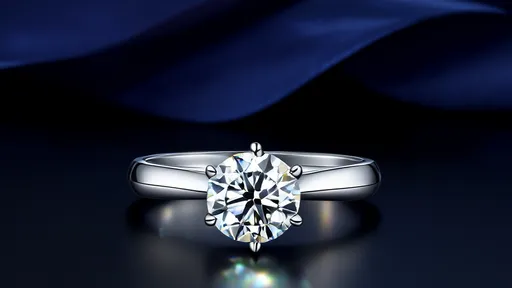
The impact on gem quality is measurable. Stones cut using ray-traced optimizations consistently show superior light performance when measured by gemological instruments. They exhibit brighter appearances, more colorful fire, and better overall scintillation. Perhaps most importantly, this technology makes high-quality light performance achievable even in smaller stones that might otherwise be cut using simpler, less optimal patterns.
Beyond mere aesthetics, the computational approach offers practical advantages for the gem industry. It significantly reduces material waste by ensuring optimal cuts from the beginning of the process. Additionally, it provides a valuable educational tool, allowing apprentice cutters to visualize and understand light behavior in ways that were previously only possible through years of hands-on experience.
As the technology continues to evolve, we're seeing the development of hybrid approaches that combine computational precision with artistic sensibility. The most advanced systems now allow cutters to input their design preferences, which the software then optimizes according to optical physics principles. This collaboration between human creativity and computational power represents the future of gem cutting—one where technology enhances rather than replaces traditional craftsmanship.
The implications extend beyond commercial gem production. Museums and research institutions are using these tools to analyze historical cutting styles, revealing why certain antique cuts produce their characteristic appearances. Some cutters are even experimenting with entirely new facet arrangements that were previously too complex to calculate manually but yield stunning optical effects when rendered through ray tracing.
Looking ahead, the integration of ray tracing in gem cutting is poised to become more sophisticated. Researchers are working on algorithms that can account for external lighting conditions, predicting how a stone will appear in various environments from candlelight to fluorescent lighting. Others are developing systems that can optimize cuts for specific shapes of rough material, further reducing waste and improving yield.
This technological revolution in gem cutting serves as a compelling example of how advanced computation can breathe new life into traditional crafts. By harnessing the power of ray tracing, the ancient art of gem cutting has not only preserved its relevance but entered a new chapter of innovation and precision. The result is a generation of gemstones that are, quite literally, perfectly calculated to dazzle.

By /Aug 19, 2025
By /Aug 19, 2025
By /Aug 19, 2025

By /Aug 19, 2025

By /Aug 19, 2025
By /Aug 19, 2025
By /Aug 19, 2025
By /Aug 19, 2025
By /Aug 19, 2025
By /Aug 19, 2025
By /Aug 19, 2025
By /Aug 19, 2025

By /Aug 19, 2025
By /Aug 19, 2025
By /Aug 19, 2025

By /Aug 19, 2025

By /Aug 19, 2025
By /Aug 19, 2025
By /Aug 19, 2025
By /Aug 19, 2025
